
A clear brief for your first AI brand film
Tell the producer who the film is for, what it should make clear and where it will appear. Add what must stay accurate, the materials you have and who approves the work. You can leave the creative solution open while making those decisions specific.
You can arrive with an unfinished idea
Perhaps you have a new product and a few images you like. Perhaps you know the feeling you want but cannot describe the film yet. That is enough to begin a conversation. The brief is a shared starting point, not an exam in filmmaking. Its job is to make the important decisions visible before a producer commits to a particular treatment.
I would rather receive a short, honest explanation than a polished document full of words that could describe any brand. Say what is happening in your business and why a film would help. If the launch date is fixed, say so. If the budget has not been decided, leave it as an open question instead of asking a producer to infer it from a reference.
- Audience and intended feeling.
- One message the film should make clear.
- Fixed details, available materials and open questions.
An imaginary ceramic studio gives us a starting point
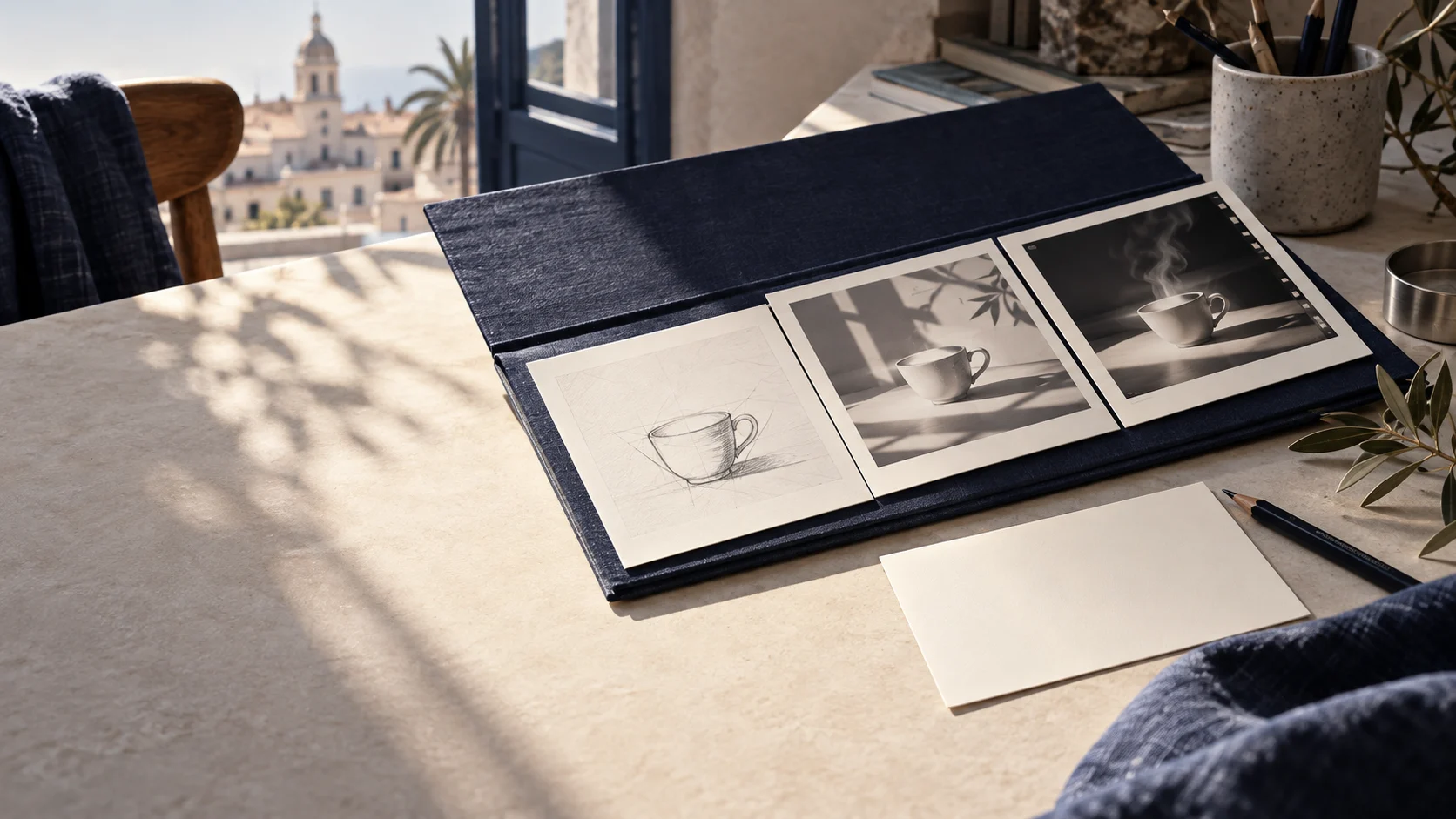
For this exercise, imagine a small studio releasing a porcelain cup. The audience is people buying a thoughtful everyday object. The film should make the cup feel quiet and considered. The website is the first destination; a short social edit is a separate deliverable. This is a fictional planning example, not a client of mine or a claim about a product.
The product shape and colour must stay accurate. The studio can supply several clear photographs and the approved logo. The atmosphere and visual idea are open. One named person will consolidate feedback. Compare that with a request for a cinematic AI video: the producer now has enough information to discuss an approach without being told which generator to use.
| Question | Known in the cup example | Still to agree |
|---|---|---|
| Audience | People choosing an everyday object | What they should feel after watching |
| Accuracy | The real cup shape and colour | Which photos are sufficient |
| Delivery | Website first | Social edits, sound and approval stages |
AI video agency or DIY: what are you paying for?
Write the first page of your brief
Your notes stay on this page. Download them when ready; nothing is sent.
- AudienceDecision needed
- One messageDecision needed
- Intended feelingDecision needed
- Where it will appearDecision needed
- What must remain accurateDecision needed
- Materials availableDecision needed
- Who approvesDecision needed
Compare the notes with your sources before production. This is a planning exercise, not automatic analysis.
Explain the part of a reference you want to keep
A reference can show light, rhythm, humour, intimacy or camera movement. Write one sentence about the part that matters. You might like the slow approach to an object but dislike the colour, or appreciate the transition while wanting a much warmer tone. Without that note, a producer may follow the wrong part of a reference that you both think is clear.
Add one example of what would feel wrong when it helps. Keep the selection small enough to discuss. A dozen unrelated videos can create several competing briefs. If a reference depends on a recognisable performer or a particular piece of music, treat that as a separate question rather than assuming those elements will be available for your own production.
Draw a line between imagination and accuracy
Describe what can be invented and what must survive unchanged. A fictional landscape may be flexible. A product label, a person’s face or a mechanical operation may need careful checks against supplied material. The distinction helps decide whether a scene can be generated freely, should be built around real footage, or needs a different production approach.
Put uncertainties in the brief too. If you do not yet have a usable photograph, say that. If a device has to demonstrate a real function, explain how that function can be verified. A beautiful scene is not proof that the object works as shown. The discussion should reveal where a representative sample is needed before the full sequence is commissioned.
Make the next conversation easy to act on
Use the worksheet to collect the audience, message, destination and fixed details. It produces a plain text file you can keep. It does not upload your materials, assess permissions or promise a price. A first page is useful when it opens the right questions; it does not need to resolve every production choice before you talk.
Attach the relevant brand guide and available images when you actually share the brief with a producer. Separate approved material from references. Give the reviewer’s name and availability, then ask for a proposed scope with the open assumptions identified. To discuss a film with me at SOLONSKY Films, send that first page and the idea behind it. We can discuss what should be made and how to check that it expresses what you mean.
Watch an authored AI film
An authored film from SOLONSKY Films. It illustrates the storytelling approach.
The video provider connects only when you press play. Watch on YouTube.
Questions
Do I need to write the script first?
No. Explain the audience, message, intended feeling and constraints. Script development can be part of the scope you discuss.
Should I specify an AI model?
Name a technical requirement if it matters. Otherwise explain the result you need and let the production approach be discussed.