
Voiceover or dialogue: give your AI film the right voice
I choose the voice after deciding what the viewer needs to understand. A narrator can carry an idea across several images; dialogue belongs to a person doing something in a scene. Sometimes the film needs only a few carefully placed sounds. None of these routes automatically makes a story better.
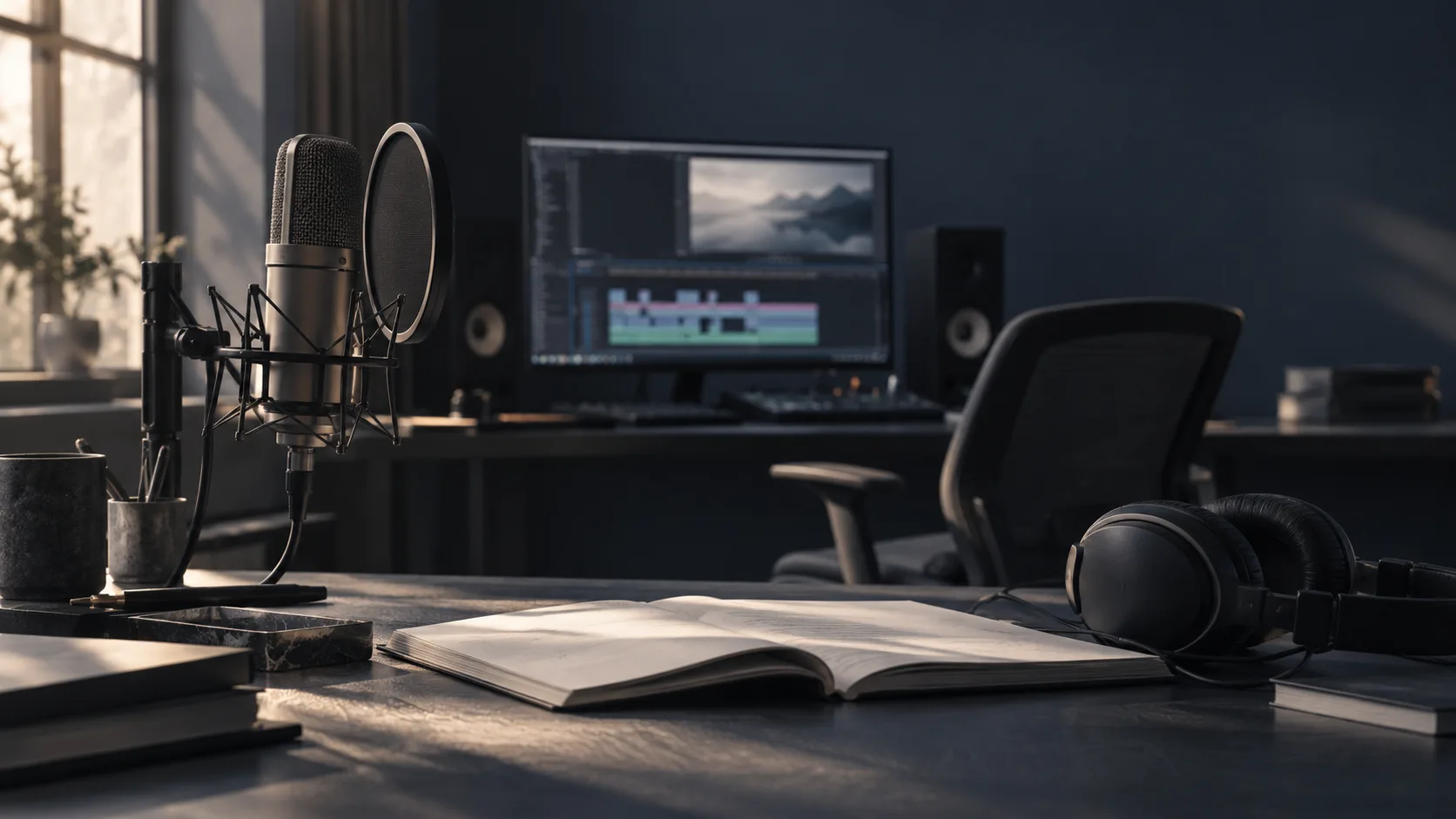
Listen to what the image cannot say
Imagine a fictional night-time museum opening. A hand unlocks a door, a visitor pauses before a sculpture, and a light reveals its outline. I would not add a voice saying that a door opens. The useful words might explain why this evening matters: a chance to see a familiar place differently. That gives the voice a job instead of filling every quiet moment.
I first write the thought I want someone to take away, then watch the planned images without speaking. What is already clear? What would a newcomer misunderstand? If the missing piece is an idea, narration may help. If it is a relationship between two people, a short exchange may serve it. If it is merely the name of the event, a readable title may do enough.
Compare three routes before choosing a voice
A voice outside the picture lets me change the wording without matching every syllable to a visible mouth. A speaking character adds a performance to judge: delivery, pauses, expression and movement must belong together. A film without speech places more responsibility on the pictures and titles. I discuss those trade-offs before building the full sequence.
For the museum example, the same invitation could work as a calm narrator over the rooms, a conversation between two visitors, or a sequence led by footsteps and a final event card. I would make a small rough version of the strongest two options. This is a creative comparison using our own material, not a claim that one tool or style wins for every brand.
| Route | Useful when | Check before committing |
|---|---|---|
| Narration | One thought connects different images | The words add meaning and fit the cut |
| Dialogue | A relationship or reaction carries the scene | Exact wording, delivery and visible mouth agree |
| No speech | The action and titles explain the invitation | The message survives with audio muted |
Leave room for a sentence to land
A written script can fit on one small page and still crowd a short film. I read it aloud, including names and numbers, while timing the whole take. A pause that lets us notice the sculpture is part of the film, not wasted time. If the line is too long, I usually remove a thought before asking the speaker to hurry.
The timing worksheet uses your word count, your chosen speaking speed and your allowance for pauses. It is a planning estimate. It does not hear your voice, judge the performance or predict lip synchronisation. A recorded take can be slower or faster; use its measured duration when you have it. A translated line also deserves a fresh read rather than the timing of the English script.
- Read the names exactly as they should sound
- Mark where the picture needs attention without words
- Time the complete take, including breaths
- Keep a small margin for the opening and ending
Does your script leave enough time?
Paste a draft and choose your own pace. This is a word-based estimate, not a recording or a recommended speaking speed.
Words: 20
Estimated speech and pauses: 13.2 seconds
Time left for pictures and the ending: 16.8 seconds
Formula: words ÷ words per minute × 60 + pauses. Time the real take before approving the edit.
Make one difficult passage before the whole film
I test the line that contains the brand name, an emotional turn or a difficult action. With a narrator, I listen for pronunciation and whether the emphasis changes the meaning. With a character in the picture, I also watch the mouth and the face during pauses. A convincing first word does not prove that the whole exchange works.
Then I place the test in a rough edit. The voice may sound lovely on its own but compete with a loud musical phrase, or arrive before the viewer can read the event card. I adjust the relationship between these elements in the edit. There is no universal volume setting that can replace listening to the actual mix on ordinary speakers.
Give every language its own performance
For a film from SOLONSKY Films, I agree the spoken text, voice direction and intended languages with you. A translation should sound like something a person would say in that language. I may shorten a clause or move a pause while keeping the meaning. Any change to a factual claim needs your approval; natural phrasing is not permission to invent a new promise.
I ask the reviewer to compare the final spoken words with the approved text, check captions against the actual take, and watch the ending on a phone. Keep the voice track separate from music and effects if later language versions are part of the agreed delivery. This leaves a practical way to replace the narration without starting the entire sound edit again.
See voice recording and dialogue replacement
Official Blackmagic Design lesson in English, recorded for Resolve 17. It shows voiceover and ADR technique; current interfaces may differ. It is not a test of AI voices.
The video provider connects only when you press play. Watch on YouTube.
Questions
Do I need a speaking character to make the film feel personal?
No. An authored voice, meaningful actions or real memories can provide that connection. Choose the device that serves the story.
Can the worksheet tell me whether an AI voice sounds natural?
No. It estimates duration from the assumptions you enter. Listen to a real take in the edit to judge the delivery.
Can I change the script after the picture is finished?
Often, but a new line may affect timing, captions, performance or a visible mouth. Agree the change before treating it as a small replacement.
Technical sources
- Blackmagic Design — Fairlight trainingOfficial lessons cover recording voiceover, replacing dialogue and mixing audio. They describe production techniques, not a guarantee about an AI voice.